The Reflecting Pool Is Not Innocent: Toward Dynamism, Not Restoration

Much critical attention has followed President Donald Trump’s mendacious treatment of the Lincoln Memorial Reflecting Pool between the Washington Monument and the Lincoln Memorial in Washington, D.C. Trump has now spent $16 million on a remaking of the pool undertaken with the careless disregard for ecology, history and causation worthy of a huckster president who views the world from a limousine window. Make it “American flag blue” rendered in the most insipid fashion – literally a blue swimming pool coating, which the president needed to literally drive on to verify – deserves the tide of ridicule it has reaped.
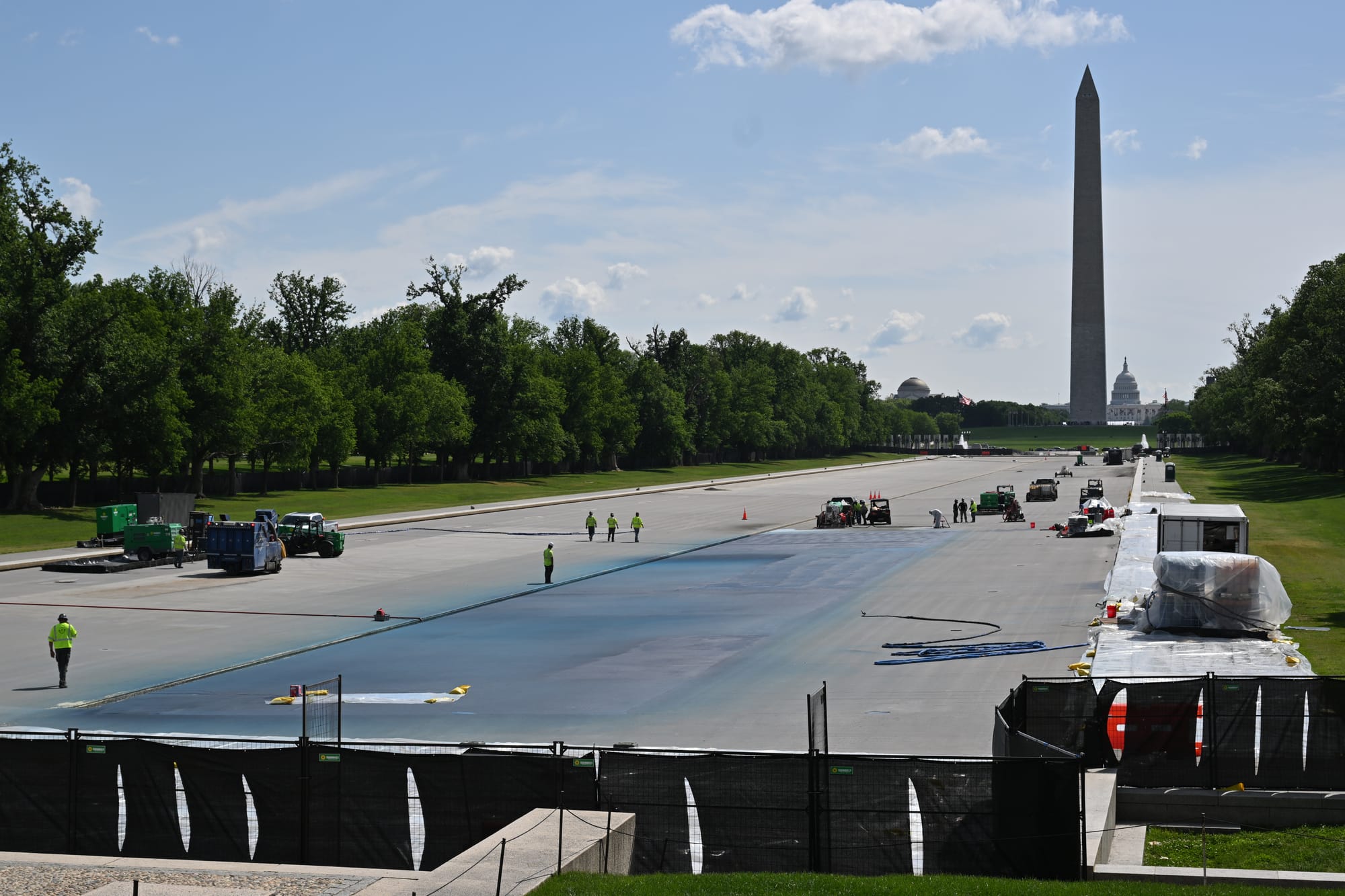
The concerns for the supposed violation of a sacred landscape construction of Platonic preciousness, however, really miss the mark. As a practitioner of heritage conservation (or historic preservation, as it is called in the United States) I share the concern for fiat-driven remaking of landscapes and buildings in the capital. Yet I also fear that the response to Trump’s capricious disasters is an attempt to find and defend a kind of social innocence in sites like the reflecting pool. The treatment of the material forms as inviolable both implies that the neoclassical order of the capital needs to be a fixed system preserved by strict rules and ignores the messy social dynamics that make spaces like the reflecting pool open to interpretation by the most ordinary Americans.
The reflecting pool dates only to 1922, when it was opened eight years after the completion of the Lincoln Memorial. Its designer was Memorial architect Henry Bacon, whose caustic treatment of the nature of the site occupies just a few degrees from Trump’s view. Bacon insisted on rendering an imperial mirror – he termed it a “water mirror” – for the Washington Monument setting up the visual significance of his neoclassical Lincoln Memorial – constructed at the expense of destroying a vibrant, living marsh. Bacon of course merely fulfilled a desire set by the US Congress formally in the 1890s.
Power and the Production of Nature
The reflecting pool is 2,030 feet by 167 feet and contains somewhere around 6.75 million gallons, with a depth of 18 inches. Like many landmarks in D.C, it is a diminutive and derivative version of something larger and more overtly imperialist in Europe – in this case, the Grand Canal at the Palace of Versailles outside Paris. King Louis XIV charged his designer André Le Nôtre with creating an epic space showing the monarch’s ability to invent the seemingly natural and thus pronounce that even nature bowed to his reign. Between 1668 and 1671, the canal took shape with a length over one mile and a depth of 6 ½ feet. The canal needed to appear as if it had always been part of the larger setting of Versailles that landscape architecture mystified through a chain of sleights of hand.
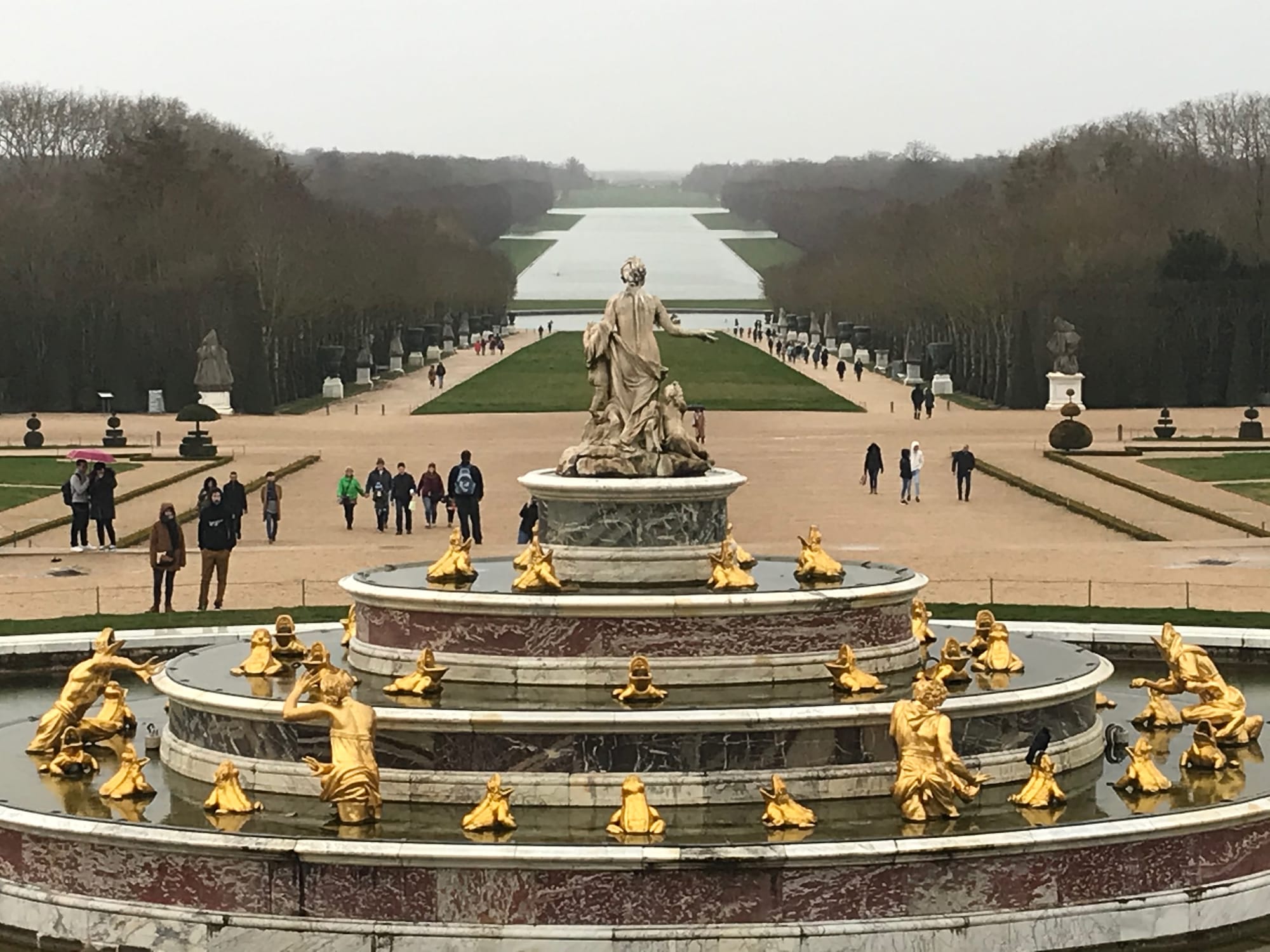
Louis XIV crafted a mirror pool he mostly saw from the long distance back to the Hall of Mirrors in his palace. Yet his pool was deep enough to stage the royal flotilla and perform fantastic naval battles for entertainment. Its supply of water came from pumping Seine River water uphill, so that the perfectly rectangular pool was actually leeching from an actual natural waterway. Between the court of the king and the canal was set the Bassin de Latone, first designed by Le Nôtre in 1670 and revised by Jules Hardouin-Mansart in 1686. In this basin emerged a tiered fountain surmounted by a gilded statue – designed by Gaspard and Balthazard Mansy – of the Roman goddess Latona (in Greek, Leto), who birthed the deities of the sun and the moon. The reflecting pool was subservient to the goddess who created the sun and the moon, but that goddess was beneath the position of the Sun King. In reality, of course, the canal at Versailles is subservient to the waters of the Seine. Without the river, Louis XIV would have had no visual order to confirm his dominion over nature, or what version of nature his rule instantiated. Louis XIV, like Trump, favored a capitalist system in which his state also generated the economy through mercantilist control, not for the collective benefit, but so that the state picked the winners and losers.
The ecological philosopher of Marxism Jason W. Moore posits that capitalism had long sought “the scientific and symbolic creation of nature, as something that could be mapped, abstracted, quantified and otherwise subjected to linear control.”[1] What better modern form to display capitalism’s ability to vanquish nature-as-found with nature-as-produced than the static, orthogonal, ruler’s-eye-designed reflecting pool? Landscape architecture sought to present several versions of this perfect form in early modernity, such as the boundless quattrocento view into shaped plantings and the sublimation of rugged landscape into gardens and lawns. Yet the reflecting pool became the ultimate artifice, offered not for the benefit of the public but as a visual device confirming dominance to the ruling figures of the capitalist state.
Origins of the Lincoln Memorial Reflecting Pool
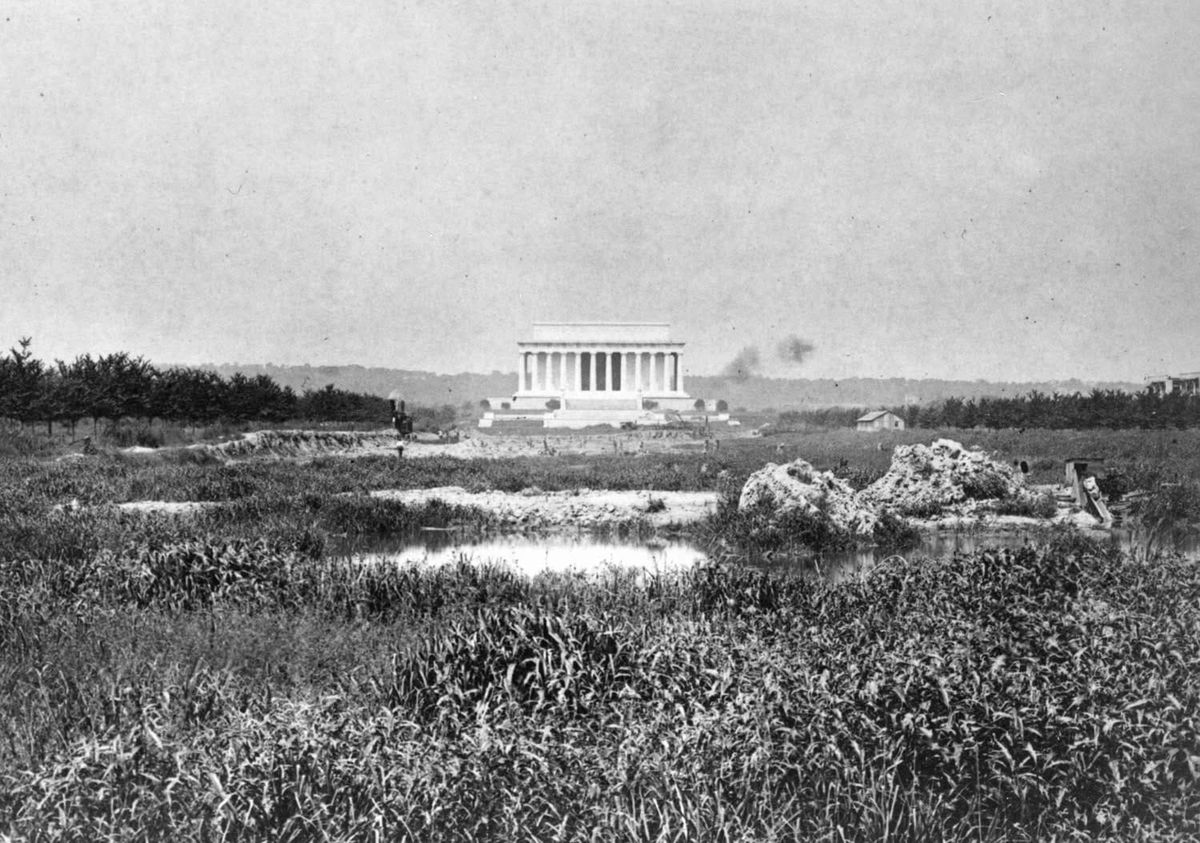
The Lincoln Memorial Reflecting Pool represents a more modest effort and producing monumental nature, yet also the crowning feature of eradicating living ecology. After the Washington Monument’s construction resumed in 1877, Congress began taking aim at the Potomac River’s marshy lands to the west, known as Kidwell Flats after Georgetown druggist John Kidwell laid claim to the land. Before European conquest, these lands were home to the Nacotchtank and Piscataway peoples. The Critic and Record newspaper dubbed the land “a great nuisance” to capital beautification in its September 12, 1881 issue. When the Washington Monument had opened in 1884, most of the Kidwell Flats still were submerged with Potomac water much of the time.
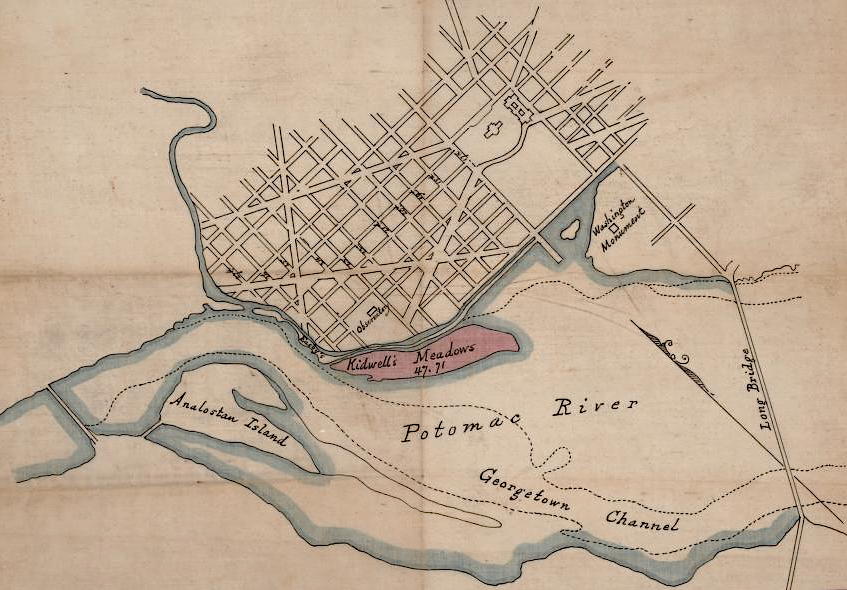
The federal government had to sue Kidwell to land the title, which it accomplished by 1892. In May 1896, the U.S. House Committee on Public Buildings and Grounds approved a plan to infill the 700 acres of marsh, which were described as being then occupied by a “second growth forest of trees.” The flat lowland would be raised and planted with “flowers and shrubs, artificial lakes, etc.” according to the committee minutes. The plan did not advance through the full Congress, and when President William Howard Taft launched the effort to build a monument to President Abraham Lincoln, the site was still rugged and undeveloped, as it remained even after the Lincoln Memorial was complete in 1914. In 1915, when the federal government’s architect for the memorial and pool Bacon visited the site, he reported its mud flats were unsightly and in need of infill. The Army Corps of Engineers would eventually dredge 12 million cubic yards of mud to raise the Kidwell Flats into a suitable site for the Lincoln Memorial and the pool that would aggrandize the Washington Monument further.
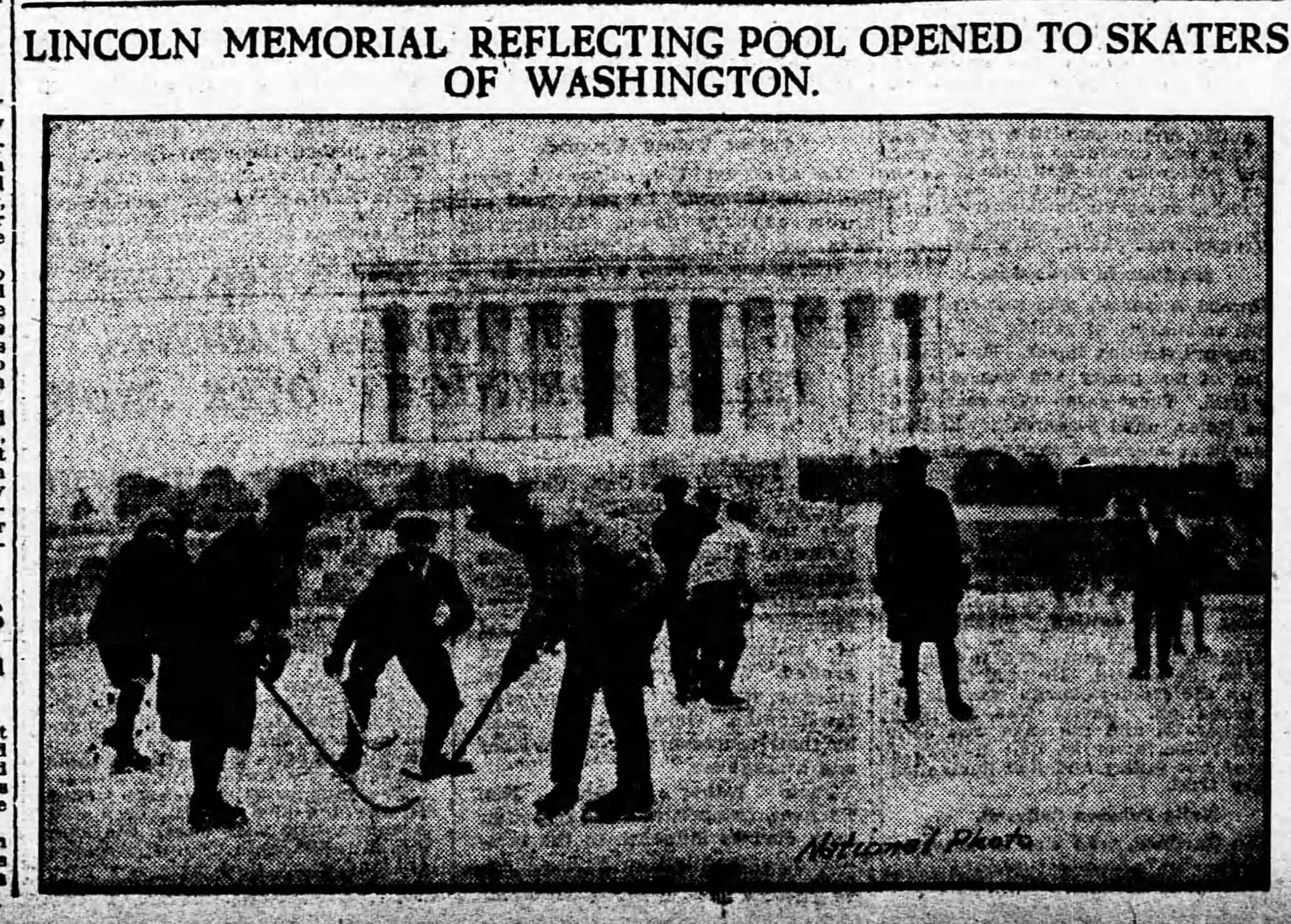
Excavation of the reflecting pool began in March 1920 and continued into 1921. As early as January 1922, newspapers reported that the federal government formally endorsed ice skating on what had been built of the then-frozen body of water. Articles portrayed benevolent military leaders inviting the public to use the pool for their recreation. By June 1922, Bacon’s “water mirror” was fully complete. While the Versailles canal was set in the restricted domain of the king, America’s small copy adopted to the promise of republican liberty: any American could access the water and even jump in. Yet the first few months was marred by the return of the banished nature. In November 1922, engineers observed several failures in the concrete floor caused by pockets of pressurized marsh gas seeking release to the air in the same path those gasses had exhausted for centuries.
The Reflecting Pool as a Space of Contestation
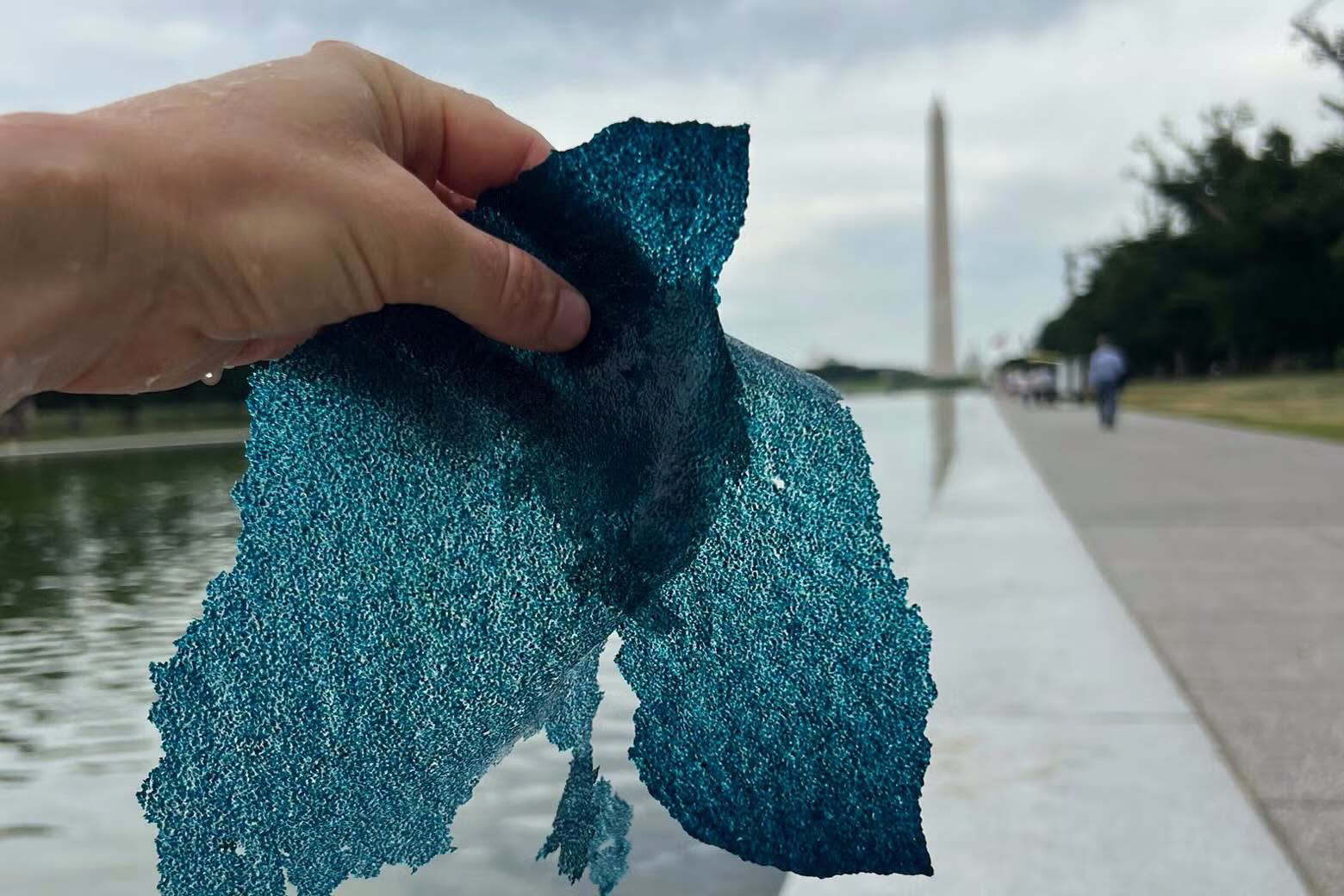
The Trump state perpetrated carceral fabulism to cover its own failure with the reflecting pool rehabilitation. The president’s ignorant demands – the drive-over, the application of hydrogen peroxide to fight the beautiful spread of algae (an unbounded life form) – led to the dissolution of the spray-on liner and the biological dynamism. Yet Trump and his minions attested to “vandalism” by anti-government radicals as the real cause, and federal police arrested seven people for engaging in the popular action of removing floating scraps of the liner as souvenirs. Then came the fencing blocking the site off from the public – not the first fencing since the egalitarian promise of public access made in 1922, but symbolic of the repression of unsanctioned human nature.
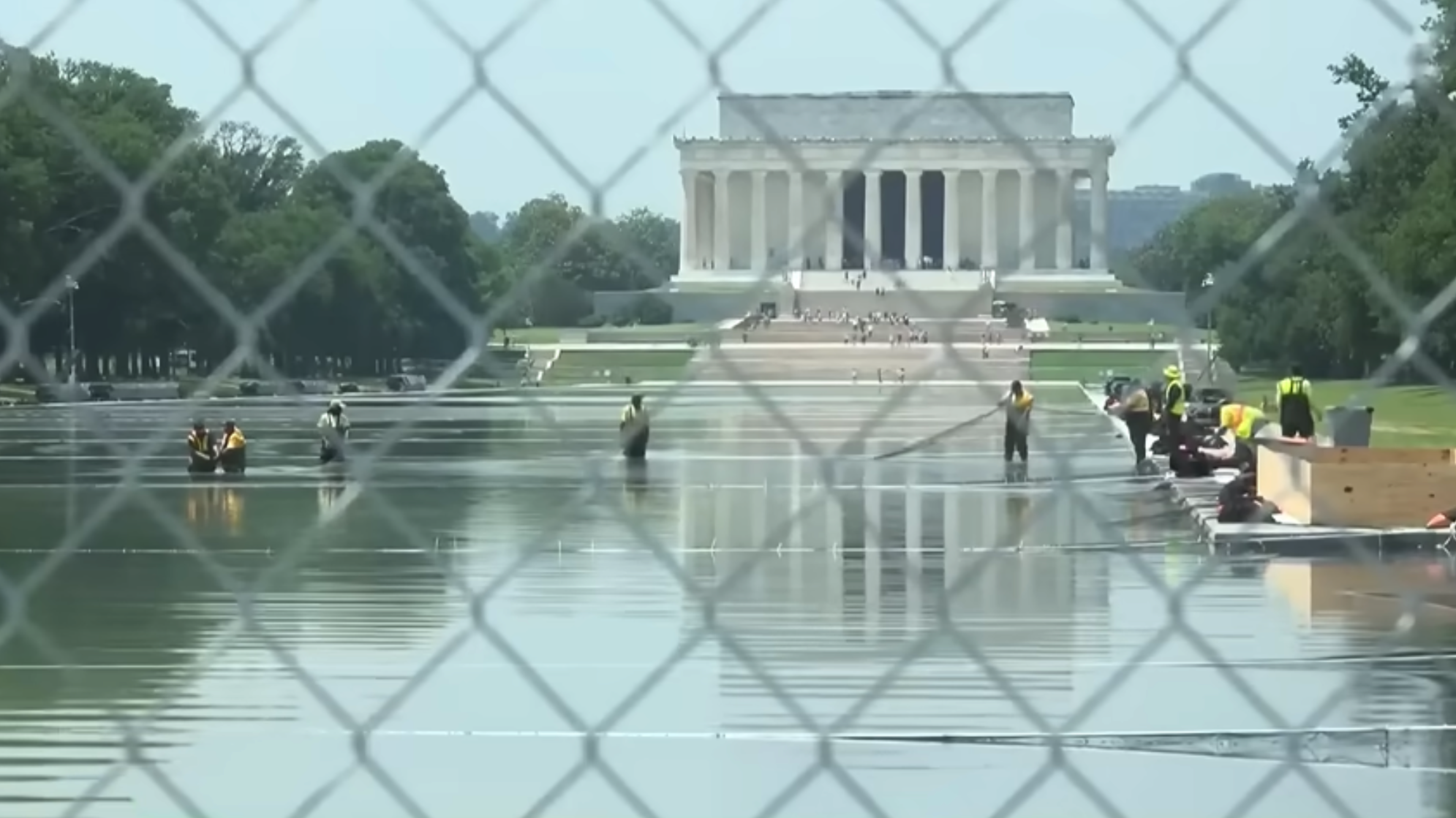
The closing of the Lincoln Memorial Reflecting Pool is a far worse affront to the heritage value of the pool than the ludicrous Miami Beach pool sealer, because the reflecting pool’s widest and most powerful function has been its use as a venue for confronting the power of the US state itself. In 1939, Black opera singer Marian Anderson powerfully staged a concert in front of the Lincoln Memorial on Easter Sunday (April 9), with First Lady Eleanor Roosevelt providing federal approval. Anderson had been banned from performing in Constitution Hall by the Daughters of the American Revolution and prohibited by the District of Columbia from singing in a public high school auditorium. 75,000 people attended Anderson’s performance in front of the visage of the Great Emancipator, beginning a long tradition of the Memorial and the reflecting pool as a symbolic stage for civil rights demonstrations.
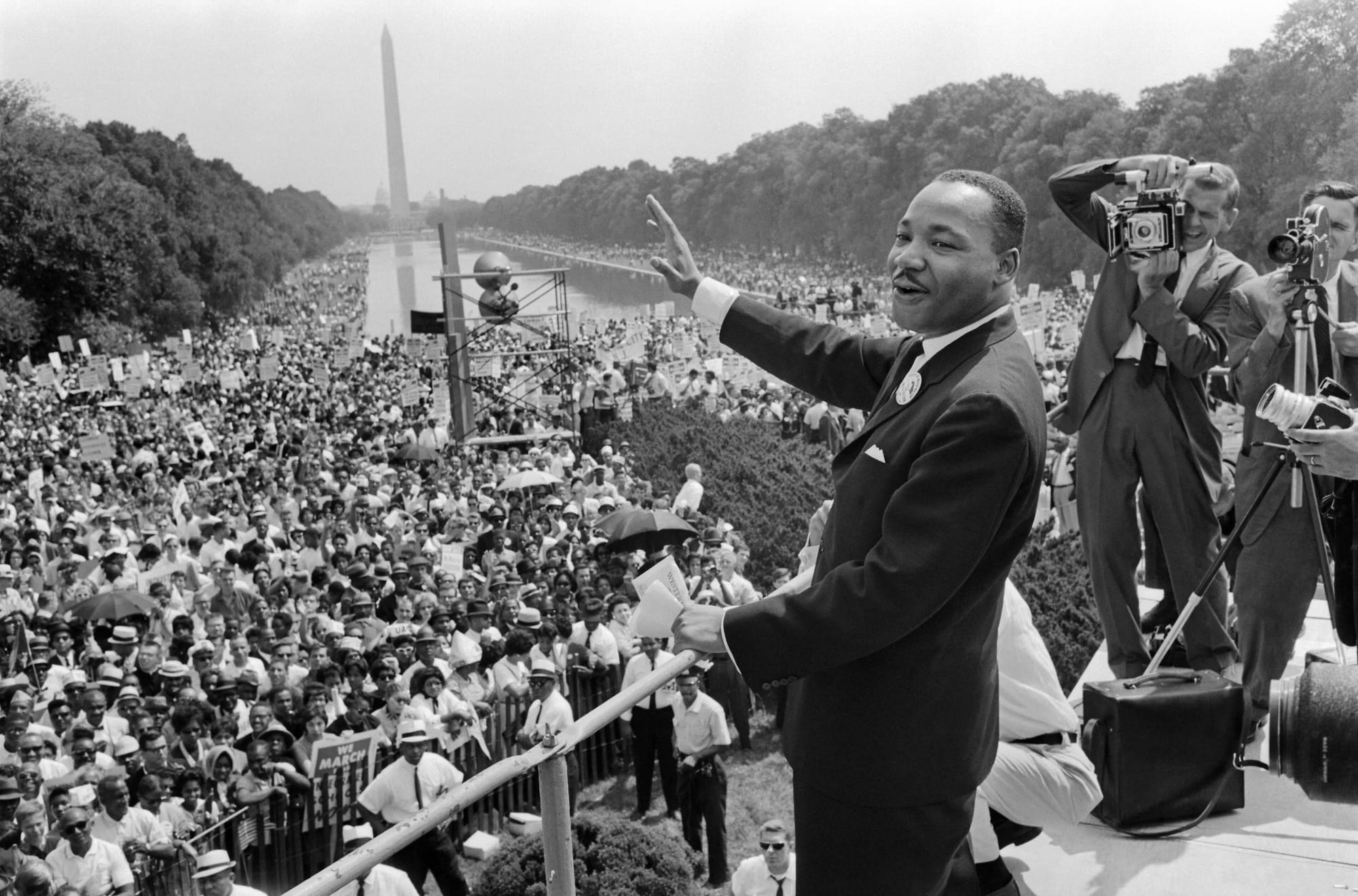
Most famously, of course, would be the March on Washington for Jobs and Freedom that ended at the reflecting pool on August 28, 1963. There Rev. Dr. Martin Luther King, Jr. gave his “I Have a Dream” speech to 300,000 people assembled around the reflecting pool. The mirror image of the Washington Monument – an icon dedicated to the enslaving first present – and the canopy of trees surrounding the pool became overlaid with the reflections of the heads of those gathered, forming a visual frame around the Washington Monument. King expressly invoked the march’s aim to renegotiate the social compact with the U.S. government. Calling the “unalienable rights” set forth in the Declaration of Independence as a “promissory note,” King stated: “In a sense we've come to our nation's capital to cash a check.”
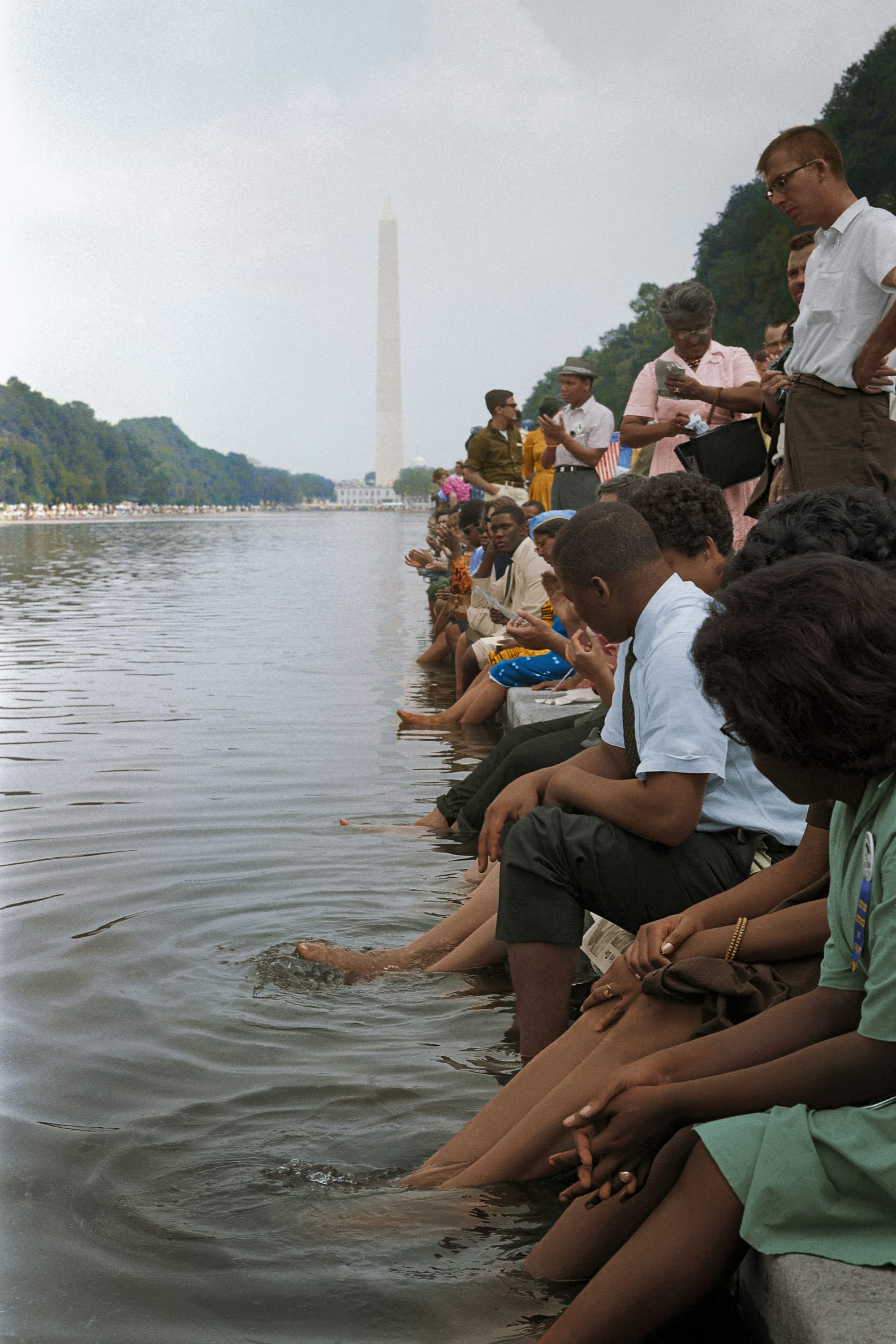
After King’s tragic assassination, Rev. Ralph Abernathy, King’s successor as head of the Southern Christian Leadership Conference, joined Coretta Scott King, Rev. Fred W. Shuttlesworth, Rev. B.W. Smith, Rev. Otis Moss, Rev. D.A. King and others to announce The Poor People’s March set for May 1968. That march envisioned a national distribution of smaller marches leading to a nationwide convergence in D.C. The organizers chose the reflecting pool as the ultimate destination. Instead of a single day’s gathering, though, they received a National Park Service permit for a tent village – named “Resurrection City” – representing national housing insecurity. With space for 3,000 demonstrators, Resurrection City stood for two weeks. The Poor People’s March was instrumental in pushing Lyndon Johnson’s “Great Society” program toward an intersectional approach to the promise of civil rights, drawing those rights to a whole person program including housing, education and health care.
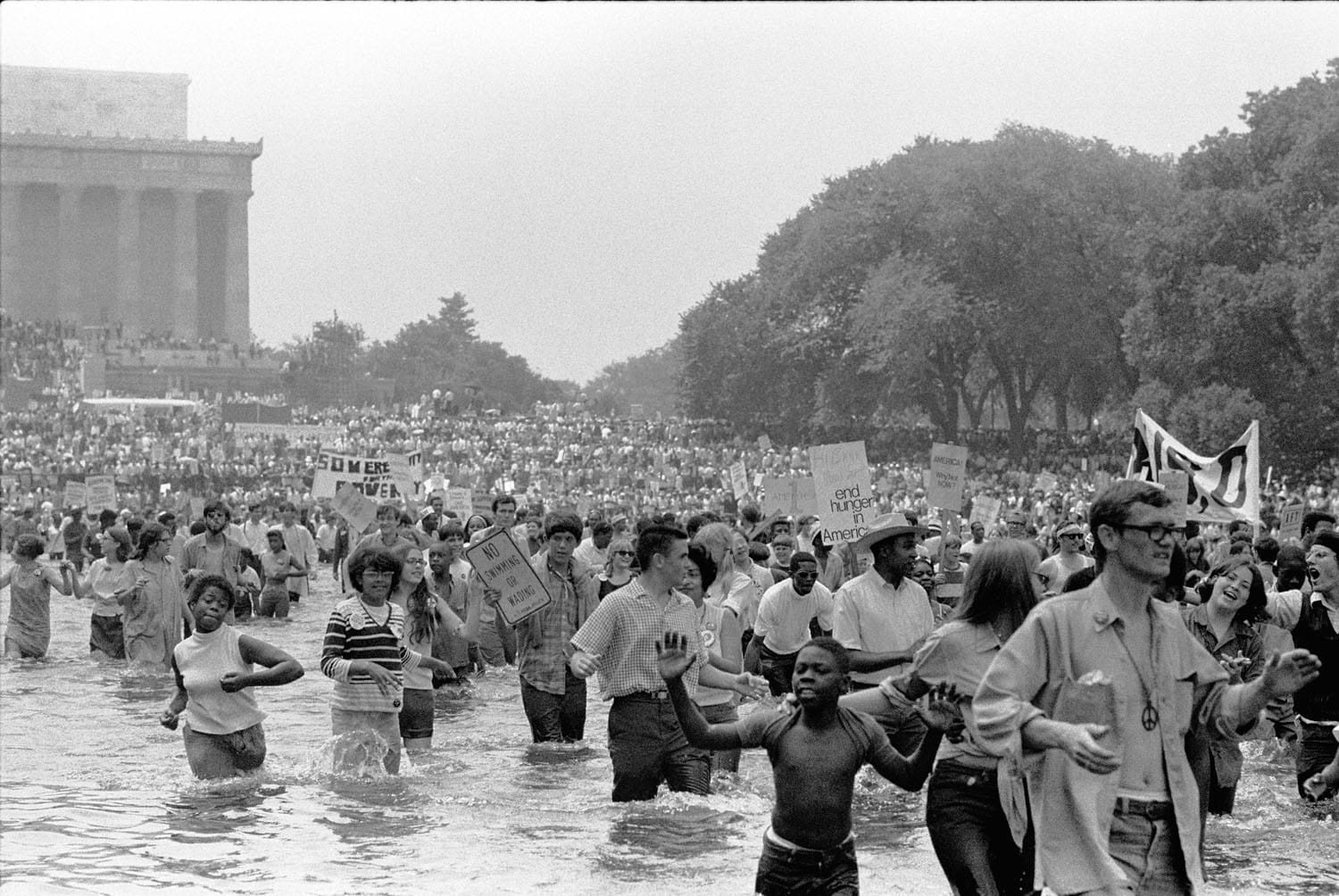
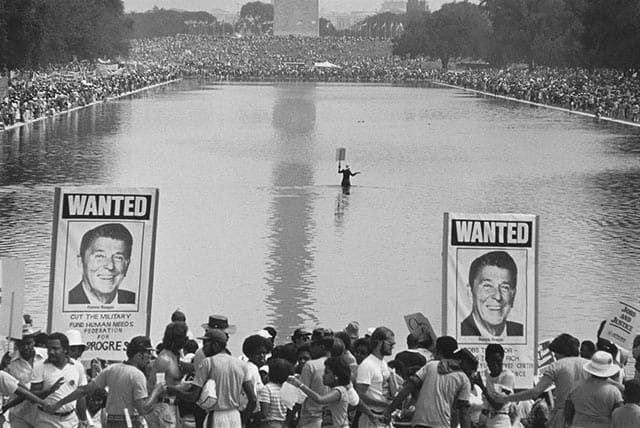
Demonstrations against the Vietnam War and subsequent U.S. imperialist military campaigns are also part of the reflecting pool’s long history. Between the memorials to Washington, the contradictory founder, and Lincoln, the supposed emancipator, the static axial pool provides a backdrop for demanding new meanings for the nation’s symbols forged not in empty rhetoric but in popular direction of the nation state itself. While Versailles’ canal provided one precedent, the reflecting pool as an open space for mass mobilization against the state is a distinction that almost redeems its didactic origins. At the reflecting pool, protests have inspired the course of history, rendered government officials fearful, made short media-ready points and failed completely at galvanizing real change. Here activists continue to dare to engage in what Emily Apter has termed the “instrumentalization of the unforeseeable,” or the harnessing of an unknown future that hopefully belongs to those assembled.[2]
Against Restoration – Not the Pool, Not the Power
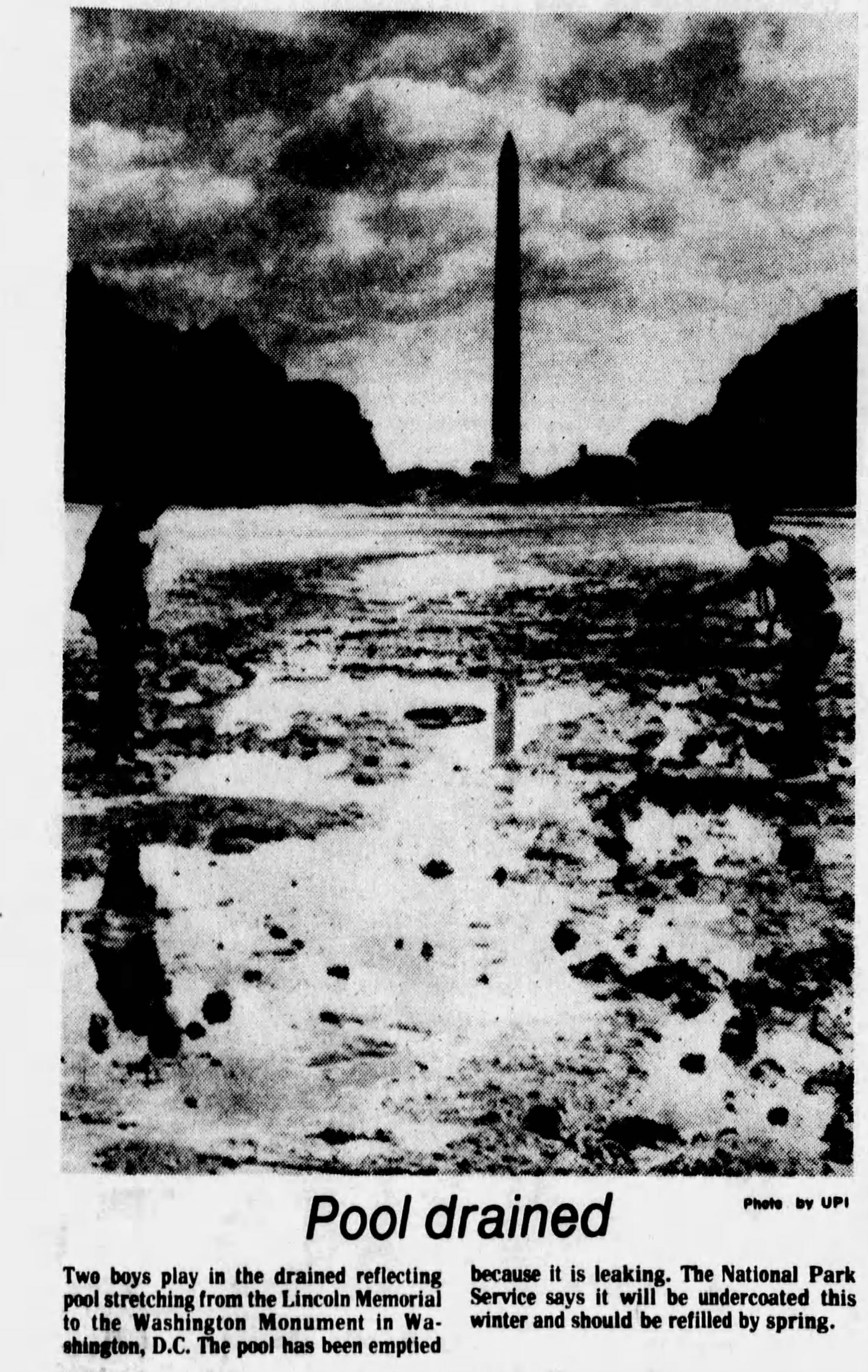
In 1980, engineers realized that the pool had sunk a full foot, and devised a scheme to build a new floor – which only added weight to the structure. More subsidence followed. Under the presidency of Barack Obama, the federal government spent $30.74 million to shore up the floor by driving wood piles beneath it. In that project, the water source was switched from the engineered city water system to a draw from the Tidal Basin’s waters, somewhat linking the pool back to the watershed its site once drank from.
Trump’s dictatorial approach to remaking Washington has engendered much controversy, but its schemes are rather unremarkable – a large gilded ballroom, a mediocre victory arch, his name on a few buildings and a cheap pool seal on the Lincoln Memorial Reflecting Pool. Trump’s neofascism is more invested in the state’s direct biopolitical power against its enemies and dissenters than in imperial architectures. Of course, the president as a real estate developer also left behind a pretty weak portfolio lacking any sweeping stylistic statement. Still, Trump’s spatial programs of control of the political uses of space aim to threaten what makes the reflecting pool truly special.
Of course the media will continue to fixate on the grand guignol featuring National Guard soldiers guarding workers hand-removing algae and the continued defenses and excuses coming from Charles Antinone, President and Chief Operating Officer of Greenwater Services, the company who continues landing no-bid contracts to make the problem it created possibly worse. Greenwater is owned by Trump’s Florida neighbor – whose career began in Cleveland, Ohio – John J. Carafaro, who previously spent long years developing those other conditioners of produced nature, shopping malls. In the shopping mall, nature appears as commanded and constrained – trees living in hard planters, water bubbling in fountains children are banned from investigating and many plants are simply plastic forgeries.
Those of us who advocate for the conservation of built heritage should not fall prey to the usual rearguard advocacy of the reflecting pool’s preciousness. Its life belongs more to the shopping mall view of nature than to anything ecologically healthy. Its form has sagged and cracked from the start, and its contours are not what make it an enduring American space. We should not rail against Trump for ruining something perfect, nor should we demand it be “restored” after he leaves office. Restored to what condition? The 1922 marsh gas cracking, or the 1980s subsidence? True restoration would let the marsh return and claim the land – knowing that the land can’t truly be returned to an origin point, only reshaped by the same humans who scraped it into something more ecologically healthy.
Instead we should protect the pool’s lack of innocence and its function as an open social space. Here is a borrowed imperial form that has gained its deepest meaning through the claims of the disenfranchised, the radical and the visionary. The contradictions of the site’s histories offer a chance for breaking from historic preservation as a quest for perfectionism to realize a preservation imbued with the collective dreams of the ordinary people of the nation. The pool cannot return to its 1922 state any more than the U.S. government can return to 2015, and we should rejoice on both counts. Post-Trump, the Lincoln Memorial Reflecting Pool – like the nation – cannot revert to any of its past imbalanced moments. It can only caron toward a future where those imbalances are righted.
[1] Jason W. Moore, Capitalism in the Web of Life: Ecology and the Accumulation of Capital (New York: Verso, 2015), p. 86.
[2] Emily Apter, Unexceptional Politics: On Obstruction, Impasse and the Impolitic (New York: Verso, 2018), p. 96.